
Why There’s No Single Price for Radon Mitigation
Radon mitigation cost in Iowa depends on your house, not just your radon number. Two homes with the same test result can get very different quotes. A system that brings a 12 pCi/L ranch down below 4.0 might be simpler than one for a 5 pCi/L split-level with a crawlspace.
Most Iowa homeowners will compare radon quotes at some point. Iowa HHS reports that all of Iowa’s counties fall in EPA Zone 1, and the state’s radon survey found 71.6% of homes above the 4 pCi/L action level.
This guide explains the factors that move a quote up or down so you can compare quotes fairly. For local service details, see our page on radon mitigation in Des Moines. For the soils and weather behind those survey numbers, read why radon is so high in Iowa.
We don’t publish flat prices on this page. Your foundation, layout and finishes decide the scope, and a number that ignores those details isn’t useful. For a rough ballpark, 2026 industry pricing guides for Iowa list typical installs at $800 to $2,500, with a median of $1,200 to $1,800. Treat that as a starting point, not a quote.
Timing matters too. Since July 1, 2026, Iowa House File 2297 requires passive radon systems in newly built single-family homes and duplexes. Supporters of the law said building one in usually costs $300 to $500, while adding a system to a finished home can cost up to $3,000.
The quick version
Cost is driven by foundation type, number of suction points, routing, fan model, sealing work and electrical. Ask every contractor to list those items on the quote.
Factor 1: Your Foundation Type
Foundation type is the biggest single factor. Here’s how common Iowa foundations compare in scope.
| Foundation | Typical system | Scope compared to a basic basement |
|---|---|---|
| Single basement slab | Sub-slab depressurization, one suction point | Baseline |
| Ranch on slab-on-grade | Sub-slab depressurization, often one point | Similar, depends on routing |
| Two-story with full basement | Sub-slab, longer pipe run to the roof | Slightly more for routing |
| Walkout or finished basement | Sub-slab with careful routing or exterior pipe | More planning and labor |
| Split-level with two or three slabs | Multiple suction points tied to one fan | More drilling, pipe and sealing |
| Dirt or gravel crawlspace | Sub-membrane depressurization | Membrane material and labor added |
| Basement plus crawlspace | Combined sub-slab and sub-membrane | Highest scope of common homes |
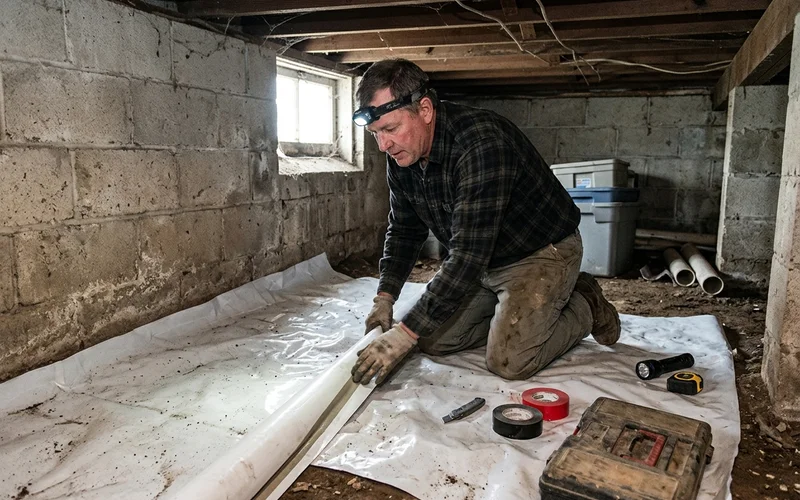
Crawlspaces add the most. We cover the floor with a 10 to 20 mil poly vapor retarder, seal it to the walls and piers, and pull suction from under it. The bigger and more cut up the crawlspace, the more material and time it takes.
Airthings estimates that crawlspaces needing encapsulation can add $500 to $1,500 to a standard sub-slab price. Thin, loose sheeting won’t do the job. Crawl Local notes that the 6-mil poly in older construction lets radon pass through unless it’s thick, continuous and sealed.
Factor 2: Number of Suction Points
Many basements on good gravel need only one suction point. Homes on tight clay soil, homes with interior footings, and split-levels with separate slabs may need two or more. A suction point is where the pipe goes through the slab or membrane, and each added point means more drilling, pipe and labor.
Good contractors measure before they decide. A quick pressure field extension check under the slab shows how far suction travels, which keeps you from paying for points you don’t need or ending up with too few.
Three questions to ask when a quote lists points:
- How many suction points are you planning, and why?
- Did you run a pressure field extension test, or is this a guess?
- What happens to the price if one point isn’t enough?
Factor 3: Interior vs. Exterior Routing
Neither routing option is always cheaper. The pipe has to get from the suction point to above the roofline, and there are two main ways to do it:
- Interior routing goes up through a closet, chase or attached garage into the attic. It’s quieter, protects the pipe from freezing and keeps the outside of the house clean. It can take more labor in finished homes.
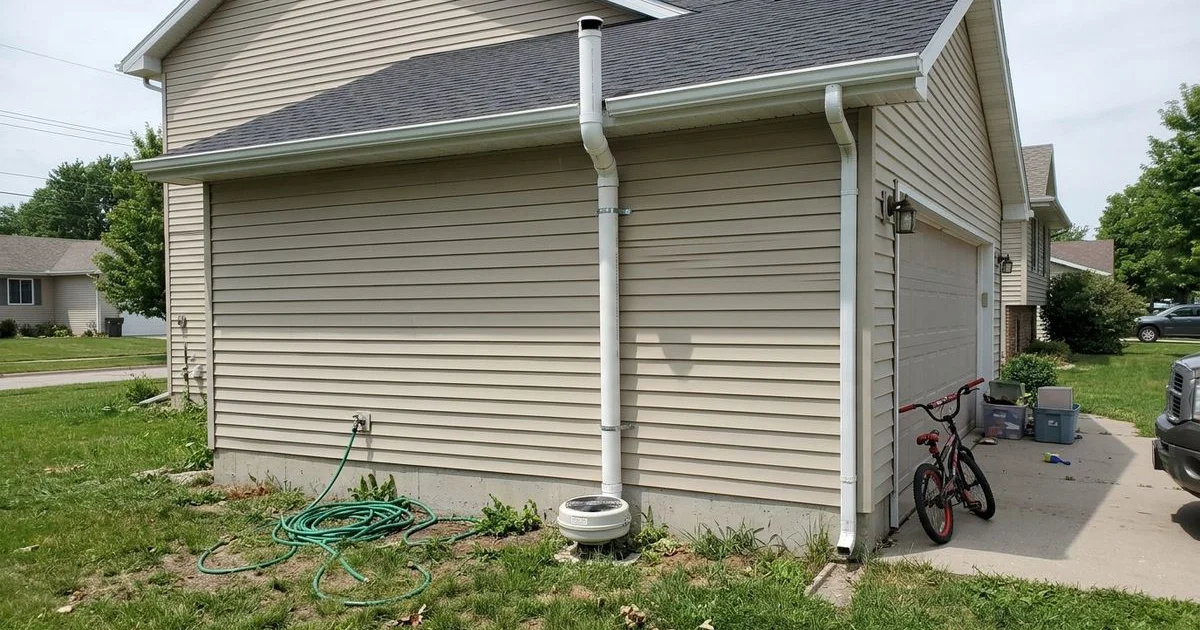
- Exterior routing goes out through the rim joist or wall and runs up the outside of the house. It avoids opening up finished space and is often faster to install.
Your layout decides which one costs less. We compare looks, noise and winter performance in our guide to interior vs. exterior radon mitigation.
Factor 4: Fan Model
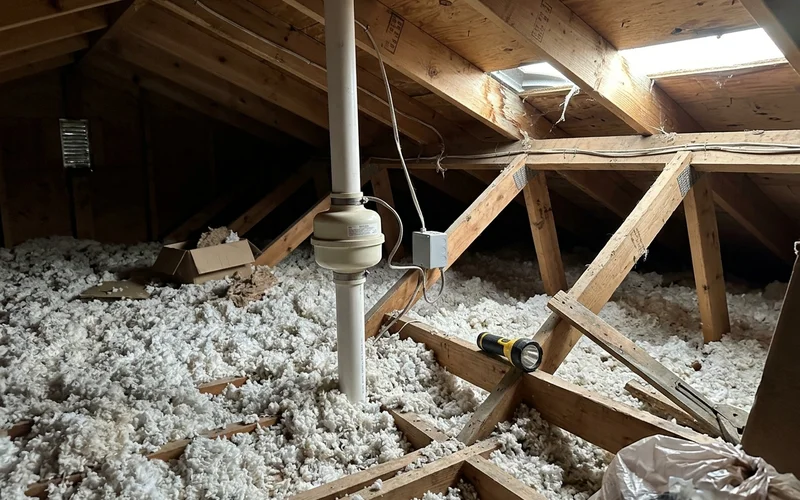
The right fan is the one sized to your soil, not the biggest one available. Radon fans come in different sizes. Homes on loose gravel can use a lower-suction fan, while homes on tight clay or with long pipe runs need more suction.
A bigger fan costs more up front and can use more power. Wattage varies widely by model. RadonPDS lists its PDS 150 at 68 watts, while the popular RadonAway GP501 is listed at about 140 watts.
Factor 5: Sealing and Electrical
Sealing makes the system work better, and older homes need more of it. The usual spots are:
- The floor-wall joint
- Open slab and wall cracks
- Gaps around pipes and penetrations
- An airtight, gasketed lid on the sump pit
Block walls and rough slabs add the most sealing time. Good sealing also keeps the fan from pulling conditioned air out of your house. The national radon group SOS Radon points out that effective sealing cuts the extra heating and cooling the system can cause.
Most fans also need power near the fan, usually an outdoor-rated disconnect or a dedicated outlet. If there’s no circuit nearby, electrical work adds to the scope. HomeAdvisor notes that electrical work can also trigger extra permits and inspections, which it prices at $25 to $150 for radon-related permits.
Factor 6: What the Warranty Covers
A lower quote with a short or vague warranty can cost more over time. Ask what’s covered and for how long: the fan, the install, and whether the contractor will come back if the system doesn’t bring your level down. The EPA’s Consumer’s Guide to Radon Reduction suggests asking whether the contractor guarantees a reduction to 4 pCi/L or below.
Every system and install from Radon Mitigation Des Moines carries a 5-year warranty. Every job includes a post-mitigation test so you have proof it worked. EPA says a properly installed system can cut radon by up to 99 percent, so a test result should show a big drop.
Factor 7: Running Cost Over Time
The fan runs 24 hours a day, 365 days a year, so running cost adds up. It depends on the fan’s wattage and your electric rate. RadonPDS figures a 68-watt fan costs about $75 a year at the US average rate, and industry estimates for typical fans run roughly $50 to $150 a year.
A higher-wattage fan on a home that doesn’t need it can cost you more every year for the life of the system. Our free radon fan operating cost calculator on the Tools page estimates monthly, yearly and five-year cost.
Why the Cheapest Quote Isn’t the Lowest Total Cost
The cheapest quote often leaves out something you’ll pay for later. When you compare quotes, look past the bottom line:
- Was the home diagnosed? A design based on measurements is less likely to need a second visit.
- Is the contractor credentialed? In Iowa, anyone mitigating radon for pay must hold an Iowa HHS credential. Ask for the credential number, since Iowa HHS’s application guide lists it among the installer details for the system.
- Is a post-mitigation test included? Without one, you don’t know the system worked.
- What does the warranty cover, and for how long?
- Is sealing included, or extra?
- What will the fan cost to run?
A system that’s undersized, poorly sealed or noisy often ends up costing more once you add a callback or a second fan.
How to Get an Accurate Quote
A written quote starts with three things from you. Send us your radon result, your foundation type and a few photos of your basement or crawlspace and the area where the pipe could run. For many homes, that’s enough for a written quote without a visit.
Complex homes may need a short site visit. Learn more about system options on our residential radon mitigation page, or call (515) 218-7447 any time. Once you have your numbers, you’ll know what’s driving the radon mitigation cost in Iowa for your home and can compare every line.