Which Radon Test Do You Need?
Not sure which radon testing option fits your situation? You’re in good company, because different homes and deadlines call for different tests. Here’s how the main options compare.
| Test type | How long | Best for | What you get |
|---|---|---|---|
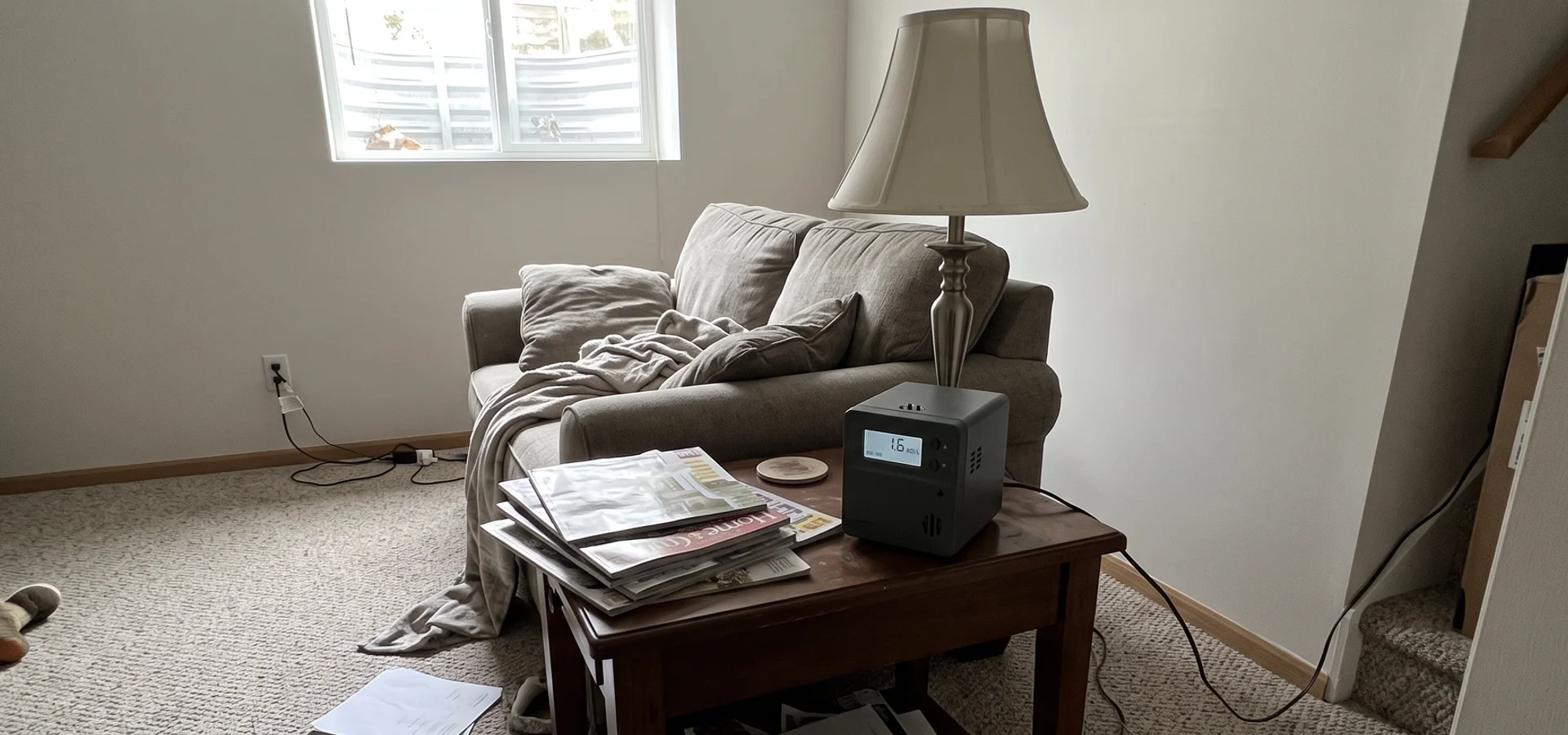
| Continuous radon monitor (CRM) | 48 hours minimum | Real estate deals, quick decisions, post-mitigation checks | Hourly readings, average in pCi/L, tamper detection |
| Activated charcoal canister | 2 to 4 days | Low-cost screening | Single average after lab analysis |
| Alpha track detector (long-term) | 90 days to 1 year | True yearly average, borderline results | Long-term average that smooths seasonal swings |
| Post-mitigation test | 48 hours, starting at least 24 hours after fan startup | Proving a new system works | Before-and-after comparison |
If you’re buying or selling, a CRM test is almost always the right call. If your first short-term test came back between 2.0 and 4.0 pCi/L, a long-term test can tell you whether your yearly average is really above the line.
A few prep steps keep any short-term result honest:
- Close up the house. According to EPA guidance, closed-house conditions should start at least 12 hours before any test shorter than four days.
- Keep it closed. Windows and exterior doors stay shut during the whole test, apart from normal coming and going.
- Leave the monitor alone. Moving it or opening the house can trigger the tamper alert on a CRM and muddy the data.
How to Read Your Result
Radon is measured in picocuries per liter of air (pCi/L). Here’s what the main numbers mean:
- Below 2.0 pCi/L: Low. Retest every few years and after major changes to the house.
- 2.0 to 3.9 pCi/L: The EPA suggests considering a fix. The WHO reference level is 2.7 pCi/L (100 Bq/m³).
- 4.0 pCi/L and above: The EPA action level (150 Bq/m³). Mitigation is recommended.
Why does the EPA care about numbers under 4.0? There’s no known safe level of radon. The EPA and the Surgeon General estimate radon causes more than 21,000 lung cancer deaths in the U.S. each year, according to the CDC.
Iowa homes feel that more than most. The Iowa Department of Health and Human Services reports an average indoor level of 8.5 pCi/L in Iowa, compared with 1.3 pCi/L nationally.
Want a quick comparison? Our free Radon Test Result Checker converts your number to Bq/m³ and shows how much reduction a system would need. If your level is high, see how we fix it with residential radon mitigation.
Real Estate Radon Testing in Des Moines
Most Des Moines homes sell in under a month, and inspection windows are short. A failed radon test doesn’t have to sink a deal, but a late one can. The Iowa Radon Survey found that 71.6% of Iowa homes sit above the EPA action level, so a high number is common and fixable.
Here’s how we keep your timeline moving:
- We schedule CRM placement as soon as the inspection is booked.
- We retrieve the monitor at 48 hours.
- You get the report quickly, so there’s time to act inside the contingency window.
- If the number is high, we quote a system right away.
- In most cases, we install it before closing.
- We run the post-mitigation test that buyers and lenders want to see.
That last step follows the EPA’s timing. The follow-up test happens within 30 days of installation and no sooner than 24 hours after the fan starts.
Iowa Code 558A.4 requires sellers to disclose known radon test results and existing mitigation systems. Iowa HHS also recommends that all new and existing homes get tested before they’re sold.
Tip for sellers
Testing before you list gives you time to fix a high result on your schedule instead of during a buyer’s contingency. A home with a working system and a low post-mitigation result is an easier sale.
How Much Does Radon Testing Cost in Des Moines?
Pricing depends on a few simple factors:
- Test type. CRM, charcoal or long-term alpha track.
- Timing. Real estate deadlines and same-week placement.
- Number of test locations. Homes with separate foundations, like a basement plus a slab addition, may need two monitors.
- Bundled services. Post-mitigation tests are part of our install process.
Hardware store kits are cheaper up front. One Iowa mitigation company, Adios Radon, puts a DIY kit at about $20. A professional CRM test costs more, but you get hourly readings, tamper detection and a report your buyer or lender will accept.
Testing is the first step in every radon mitigation in Des Moines project we take on. Call (515) 218-7447 any time, or send the request form for a quote.
Why Iowa Radon Levels Change by Season
In January, Des Moines lows average 17°F. Heated air rises and escapes through the top of the house, which pulls replacement air in at the bottom, including soil gas from under the slab. That’s the stack effect, and it’s why winter readings often run higher.
Here’s how the seasons stack up:
- Winter: Furnaces run, windows stay shut, and the stack effect is at its strongest.
- Spring: Heavy rain saturates the soil and pushes soil gas toward your basement.
- Summer: Not automatically safe. Air conditioning and closed windows can still limit fresh air, according to the team at Clean Vapor.
A single short-term test is a snapshot, and the swing can be big. Protect Environmental reports seeing one building go from 1.8 to 2.2 pCi/L in summer to 28.0 to 32.0 pCi/L in winter. We’ll tell you when a follow-up test makes sense.
For a full retest schedule, read how often you should test for radon. To learn why Iowa sits in EPA Zone 1, see why radon is so high in Iowa.
Ready to book your radon test? Call (515) 218-7447 and we’ll get a monitor on the calendar.