
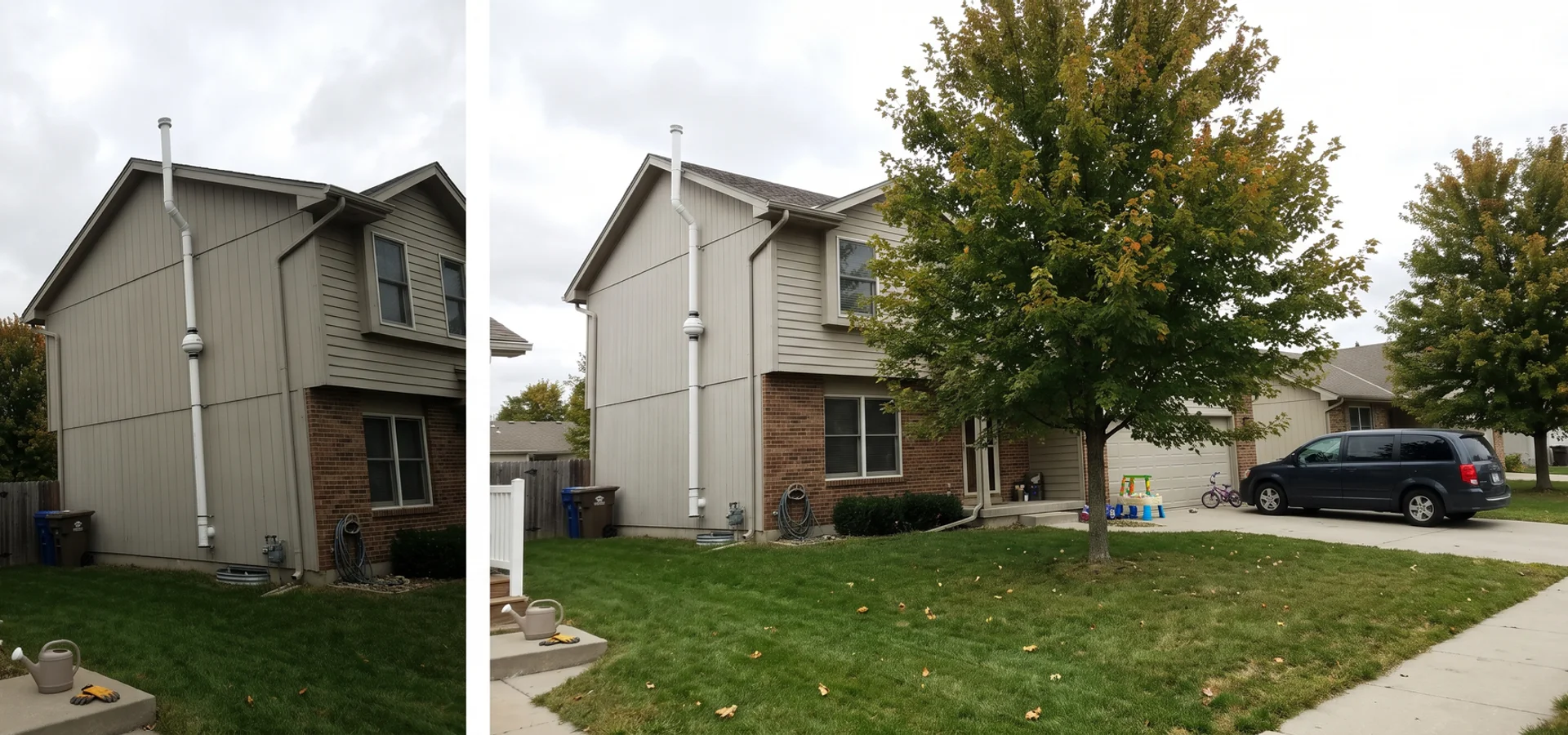
Radon mitigation pipe and fan installed on the exterior of a two-story Des Moines home
Sub-slab, crawlspace, exterior and waterborne systems

Residential Radon Mitigation Systems for Des Moines Homes

Radon systems matched to your foundation: basement sub-slab, crawlspace, exterior, waterborne and vapor intrusion. Iowa HHS-credentialed radon testing and mitigation for the Des Moines metro, backed by a 5-year warranty and 24-hour support.

  • Iowa HHS credentialed
  • 5-year warranty
  • 24/7 support
  • Since 2016

Pricing: Quoted per home after reviewing foundation type, suction points and routing.

Sound familiar?

When a Des Moines Home Needs a Radon System

A high number is common in Iowa. These are the situations we hear about most, and each one has a clear fix.

Your test came back above 4.0

The EPA action level is 4.0 pCi/L, and about 71% of Iowa homes test above it. Retesting over and over won't lower it. A sub-slab system will.

A failed test is holding up a sale

A high result during inspection can freeze a closing. We schedule installs and the post-mitigation test around your contingency dates.

Crawlspace, split-level or old block walls

Dirt crawlspaces, two or three slabs, and cracked block or fieldstone foundations let soil gas in from many spots. We design for all of them in one system.

Worried about noise and ugly pipe

Nobody wants a loud fan by the bedroom or pipe across a finished wall. We plan routing with you before we drill.

Residential radon services

What Is Residential Radon Mitigation?

Most Des Moines homes need an active soil depressurization (ASD) system to bring radon below the EPA action level of 4.0 pCi/L. We match the system to your foundation instead of installing one design everywhere. Basements usually get sub-slab depressurization (SSD). Dirt and gravel crawlspaces get a sealed membrane with suction underneath, called sub-membrane depressurization (SMD). Homes on private wells may need a waterborne radon system.

The idea is simple. A fan pulls soil gas from under the slab or membrane through a sealed Schedule 40 PVC pipe and vents it above the roofline, so radon never gets the chance to build up inside. Before we drill, we check pressure field extension under the slab so one suction pit reaches as much of the footprint as possible.

Iowa winters make this work harder. Heated air rising through the house creates a stack effect that pulls soil gas through cracks, sump pits and the joint where the floor meets the wall. That's why we seal those openings with polyurethane slab sealant and a gasketed sump lid as part of the install, not as an extra.

Every system gets a U-tube manometer so you can see suction at a glance. Every install is done by Iowa HHS-credentialed technicians, follows ANSI/AARST SGM-SF practice, is verified with a post-mitigation test and is covered by our 5-year warranty.

Services in this category

  • Exterior Radon Systems
  • Crawlspace Radon Systems
  • Sub-Slab Radon Systems
  • Waterborne Radon Systems
  • Vapor Intrusion Radon Systems
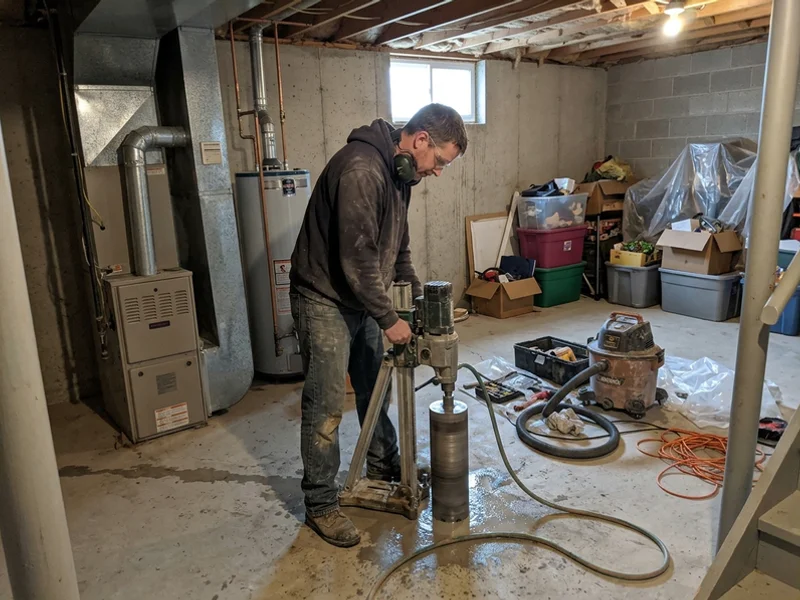
Technician drilling a sub-slab suction point in an unfinished Des Moines basement

What's included

  • Sub-slab depressurization for basements and slabs
  • Crawlspace sub-membrane systems with 10-20 mil vapor retarder
  • Exterior radon systems with roofline exhaust
  • Waterborne radon systems for private wells
  • Residential vapor intrusion systems
  • Sump pit sealing and crack sealing
  • U-tube manometer on every system
  • Post-mitigation test and 5-year warranty

Which Radon System Fits Your Foundation?

Not sure which radon system your house actually needs? No single design works in every Des Moines house.

Residential radon mitigation starts with your foundation. We look at how your home sits on the ground, then match the system to it.

The odds are good that you need one. The Iowa Radon Survey found that 71.6% of Iowa homes sit above the EPA action level of 4 pCi/L, and the EPA rates all 99 Iowa counties as Zone 1, its highest radon potential.

Here’s how the five residential system types line up.

Foundation or situationSystem we usually recommendWhat it involves
Basement or slab-on-gradeSub-slab depressurization (SSD)One or more suction pits cored through the slab, sealed PVC pipe, fan above living space
Dirt or gravel crawlspaceSub-membrane depressurization (SMD)10-20 mil poly vapor retarder sealed to walls and piers, suction pulled from under the membrane
Finished basement you don’t want to open upExterior radon systemSuction through the rim or slab edge, pipe and fan on the outside wall, exhaust above the roofline
Private well with high water radonWaterborne radon systemAeration or point-of-entry treatment that strips radon from water before it reaches taps
Soil vapor concerns beyond radonResidential vapor intrusion systemSame depressurization approach, designed for chemical vapors as well as radon

Many older Des Moines homes mix these. A 1920s house might have a partial basement next to a dirt crawlspace, and a split-level in Urbandale or Johnston can have two or three separate slabs. In those homes we often tie more than one suction point into a single fan.

Do you run a childcare center? Under Iowa Administrative Code 441-109, licensed centers must test for radon within a year of opening and mitigate if results top 4.0 pCi/L. Send us your result and we’ll sort out the right fix.

What Is Sub-Slab Depressurization?

Sub-slab depressurization is the most common radon fix in Iowa. We core a hole through the basement floor, dig out a small suction pit underneath, and connect it to a sealed pipe.

A radon fan such as a RadonAway RP145, GP501 or Fantech Rn2 creates steady suction under the slab. Soil gas follows the easiest path, which is now the pipe instead of your basement. The Minnesota Department of Health notes that a quality system can bring year-round levels below 2 pCi/L, well under the 4 pCi/L action level.

Pressure field extension tells us how far that suction reaches. Here’s what we usually see:

  • Clean gravel under the slab: often one suction point is enough.
  • Tight clay: suction travels less far, so you may need two points.
  • Interior footings: these split the soil gas flow, so they may need their own point too.

We test this with a small drilled hole and a micromanometer before we commit to a design.

Why sealing matters

Suction works best when the slab is tight. We seal the floor-wall joint, open cracks and the sump pit with polyurethane sealant and a gasketed lid. It’s part of every install because leaks steal suction from the system. Minnesota’s health department says the same: sealing limits radon flow and makes the system more efficient.

How Much Does Radon Mitigation Cost in Des Moines?

We don’t publish one flat price, because the same price can’t fit a 900-square-foot ranch and a 4,000-square-foot walkout. These are the factors that move a quote up or down:

  • Foundation type. A single basement slab is the simplest. Crawlspaces add membrane material and labor.
  • Number of suction points. Split-levels, additions and homes with interior footings may need more than one.
  • Routing. Interior pipe through a garage or closet versus exterior pipe up the side of the house.
  • Fan model. Tight soils need a higher-suction fan. Gravel needs less.
  • Sealing scope. Open sumps, block walls and large cracks take more time to seal.
  • Electrical. Most fans need a dedicated outdoor-rated disconnect or outlet near the fan.

For a national ballpark, Angi’s 2026 cost data puts most radon systems between $800 and $1,300. Simple installs start near $400, and complex homes can reach $2,500. Your quote will land inside that spread based on the factors above.

Send us your test result and a few photos of your basement or crawlspace and we can usually give you a written quote without a site visit. For a deeper look at statewide cost drivers, read our guide on radon mitigation cost in Iowa.
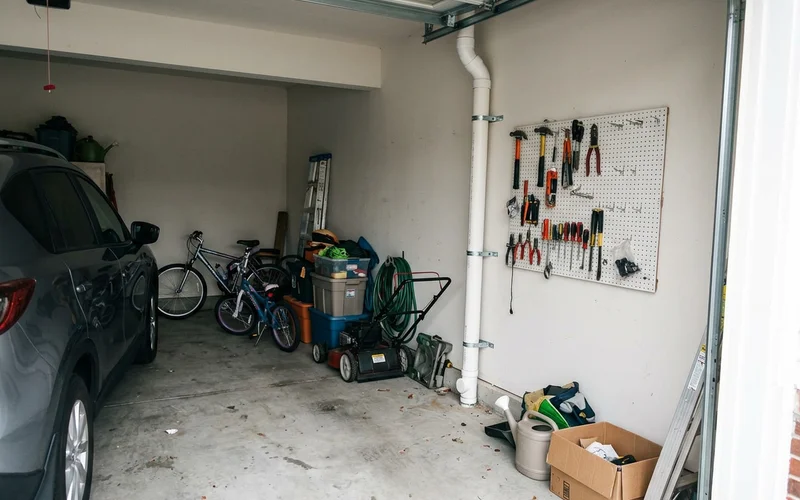
Radon pipe routed up through an attached garage wall toward the attic

Common Problems We Solve

Finished basements

You don’t have to tear out drywall. We find an unfinished corner, a storage room or a utility closet for the suction point, or we go exterior. The pipe can run through a closet chase or up through the garage into the attic.

Open sump pits and drain tile

Many Des Moines basements have a sump pit tied to perimeter drain tile. That tile can carry soil gas right into the house.

We seal the pit with an airtight lid and often use the drain tile itself as part of the suction field. Drain tile suction is one of the three most common system types listed by the Minnesota Department of Health, so it’s a well-proven approach.

Old block and fieldstone foundations

Hollow block walls and rubble foundations leak soil gas through the walls as well as the floor. These homes may need wall sealing or a second suction point. We’ll tell you up front if your foundation needs extra work.

Combustion appliances

A strong fan can, in rare cases, affect how a furnace or water heater drafts. We check the combustion appliance zone (CAZ) for backdraft when the system starts up, so the fix for radon doesn’t create a new problem.

The check follows the EPA Radon Mitigation Standards. We close the windows and doors, run the exhaust fans, wait five minutes, then use a smoke tube or carbon dioxide analyzer to look for flue gas spilling near the vent hood.

Interior vs. Exterior Routing

Both work. Interior routing keeps pipe out of sight on the outside of the house and protects it from Iowa freeze and condensation. Exterior routing avoids opening ceilings and is often the best choice for finished basements.

We compare looks, noise and winter performance in our guide to interior vs. exterior radon mitigation.

Whichever route you choose, the exhaust must end above the roof edge and away from windows, doors and vents so radon can’t come back in. Iowa’s mitigation rules follow the EPA standards, which call for the discharge point to be:

  • Above the eave of the roof.
  • At least 10 feet above ground level.
  • At least 10 feet from any window, door or opening less than two feet below the exhaust point.
  • At least 10 feet from any opening into an adjacent building.

Proof the System Worked

A radon system isn’t finished when the fan turns on. We run a post-mitigation test at least 24 hours after startup, under closed-house conditions, and give you the before-and-after numbers. North Carolina’s radon program puts the window at no sooner than 24 hours and no later than 30 days after activation, with the house closed up for at least 12 hours beforehand.

You’ll also have a U-tube manometer on the pipe. If the liquid levels are uneven, the fan is pulling suction. If they’re even, call us.

Retest every two years, and after big changes like finishing the basement or replacing the furnace. That two-year rhythm is standard advice from state radon programs, and it catches a failing fan before it becomes a health problem.

Ready to get residential radon mitigation moving? Book a radon test or request a quote with your current result. You can also see how our Des Moines radon mitigation team covers testing, commercial work and long-term maintenance.
Why homeowners choose us

Why Choose Radon Mitigation Des Moines for Residential Radon Mitigation?

Foundation-matched design

Basement, crawlspace, slab or mixed? We design for the house you have, including split-levels with more than one slab.

Iowa HHS-credentialed techs

Every installer is credentialed by Iowa HHS and holds NRPP, NRSB, CERTI or ICA School training.

Clean, quiet installs

We plan routing with you. Interior pipe through closets or garages, or exterior pipe painted to match siding.

5-year warranty

Systems and installs are covered for five years, backed by a post-mitigation test on day one.

24/7 booking & support

Call any time with a question about your result, your quote or an alarm on an existing fan.

Real estate friendly

We schedule around inspection contingencies so a high result doesn't push back your closing.

How it works

How Does Residential Radon Mitigation Work?

  1. 01

    Test

    Start with a valid result. Send us your number, or we place a continuous radon monitor for at least 48 hours.

  2. 02

    Diagnose & design

    We check foundation type, slab sections, sump pits and pressure field extension, then pick suction points and routing.

  3. 03

    Install

    Credentialed techs core the slab, set pipe, mount the fan, seal cracks and the sump, and add a manometer. Most homes take one day.

  4. 04

    Verify

    A post-mitigation test runs at least 24 hours after the fan starts, so you have proof the system lowered your level.

  5. 05

    5-year warranty

    Your system and install are covered for five years. If a covered system doesn't perform, we come back and adjust it.

Tested high? Get a system that's proven to work.

Send us your result and foundation type. Every residential system is verified with a post-mitigation test and covered by our 5-year warranty.

Our work

Real installs and testing jobs across the Des Moines metro. Click any photo to enlarge.

Client Verification

What Customers Say About Our Residential Radon Mitigation

"Our Beaverdale house tested high during the inspection and the sale was on hold. They got a sub-slab system in quickly, the post-test came back low, and we closed on time."
Megan T. · Des Moines
"We have a walkout in West Des Moines and didn't want pipe through the finished side. They ran it through the storage room and up through the garage. You can barely hear the fan."
Brian K. · West Des Moines
"Our 1920s house has half basement, half dirt crawlspace. They sealed the crawl with a heavy membrane and tied both areas into one fan. The manometer has been steady all winter."
Alicia M. · Sherman Hill
Straight Answers

Residential Radon Mitigation Questions, Answered

What radon level requires mitigation?

The EPA recommends fixing your home at 4.0 pCi/L or higher and suggests considering it between 2.0 and 4.0 pCi/L. The World Health Organization uses 2.7 pCi/L as its reference level. If you're in that gray zone, we'll walk you through the trade-offs.

How much does residential radon mitigation cost in Des Moines?

Cost depends on your foundation type, the number of suction points, interior or exterior routing, the fan model and how much sealing is needed. A simple basement with one suction point costs less than a split-level with a crawlspace and two slabs. We give a written quote after reviewing your home, and every system includes a 5-year warranty.

How long does the install take?

Most single-family homes are finished in one day. Crawlspace membranes, several foundation sections or long routing can push it to a second day. A post-mitigation test follows once the fan has run at least 24 hours.

Will a radon system work in a home with a crawlspace?

Yes. We cover the dirt or gravel floor with a 10 to 20 mil vapor retarder, seal it to the walls and piers, and pull suction from under it. This is called sub-membrane depressurization, and it's the standard fix for Iowa crawlspaces.

Should my pipe go inside or outside?

Interior routing through a closet, chase or garage into the attic is quieter and protects the pipe from freezing. Exterior routing avoids opening up finished space. We'll show you both options for your house before we start.

How loud is a radon fan?

Fans mounted in an attic, garage or outside are usually hard to hear from living space. Most noise complaints come from air rushing through undersized pipe or a fan mounted on a bedroom wall, both of which we avoid in the design.

What does the fan cost to run?

It depends on the fan's wattage and your electric rate. A fan runs 24 hours a day, so even a small difference adds up. Use our free radon fan operating cost calculator on the Tools page to estimate it.

Do you seal the sump pit?

Yes. An open sump is one of the biggest radon entry points in Des Moines basements. We install a gasketed, airtight lid that still lets you see and service the pump.

Can radon come from my well water?

Yes. Radon dissolved in private well water escapes into the air at showers and faucets. If you're on a well, test the water too. We install waterborne radon systems when the water result calls for it.

Is the 5-year warranty included?

Yes. Every system and install carries a 5-year warranty. If a covered system doesn't perform, we come back and adjust it.

Still have a question?

Our support line answers 24 hours a day, 7 days a week.

24/7 booking & support

Ready to Book Residential Radon Mitigation?

Credentialed residential radon mitigation across Des Moines and 25 nearby cities, with a written quote, a post-mitigation test where it applies, and a 5-year warranty on systems and installs.

  • Iowa HHS credentialed
  • 5-year warranty
  • Post-mitigation test