
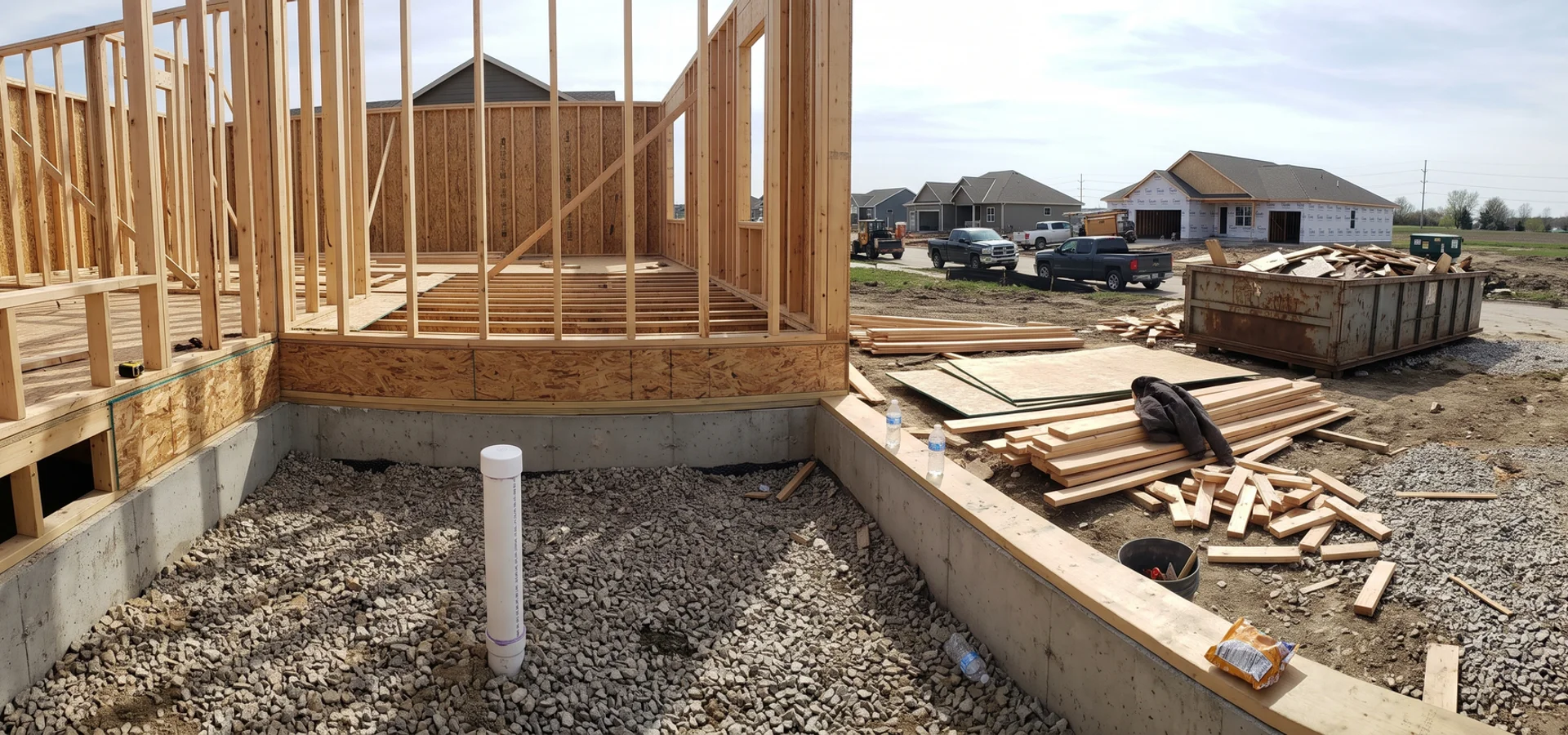
New construction home in a Des Moines suburb with a radon pipe stub set before the slab pour
Passive installs, testing and fan activation

New Construction Radon Systems for Iowa Builders and Buyers

Passive system installs for builders, post-construction testing and passive-to-active upgrades. Iowa HHS-credentialed radon testing and mitigation for the Des Moines metro, backed by a 5-year warranty and 24-hour support.

  • Iowa HHS credentialed
  • 5-year warranty
  • 24/7 support
  • Since 2016

Pricing: Builder and homeowner quotes on request.

Sound familiar?

Common New Build Radon Problems in the Des Moines Suburbs

From Waukee to Ankeny, new homes are going up fast. These are the radon gaps we see on job sites and after move-in.

"Radon proof" homes that test high

A passive pipe relies on natural draft. In many Iowa homes that isn't enough to get below 4.0 pCi/L.

HF 2297 compliance on every start

Since July 1, 2026, new single-family homes and duplexes need a passive system. Builders need it done right, every time.

Details that fail under the slab

Missing aggregate, open retarder seams and unsealed penetrations weaken a passive system before the concrete cures.

Radon work slowing the schedule

Pour dates move with the weather. We fit radon prep between plumbing rough-in and the pour.

New Construction radon services

What Is New Construction Radon Systems?

Since July 1, 2026, Iowa House File 2297 requires passive radon systems in new single-family homes and duplexes. Building radon resistance into a home while the slab is open costs far less than retrofitting it later, and it gives the homeowner an easy path to an active system if they ever need one.

For builders, we handle the parts that are easy to get wrong. That means a layer of gas-permeable aggregate under the slab, a sub-slab T-fitting or perforated loop, a polyethylene soil-gas retarder lapped and sealed at the seams, sealed slab penetrations, and a passive vent stack that runs straight up through the conditioned space to the roof. We follow radon-resistant new construction (RRNC) practice from IRC Appendix F and the ANSI/AARST CCAH standard.

For homeowners, a passive pipe is a head start, not a guarantee. A passive soil depressurization system relies on natural draft, and in many Iowa homes that isn't enough to get below 4.0 pCi/L. We test after move-in. If the level is still high, we activate the pipe by adding a fan in the attic, a dedicated attic junction box and a U-tube manometer. It's usually a short visit.

Every passive install, activation and test is done by Iowa HHS-credentialed technicians. Activations and installs are covered by our 5-year warranty, and we work around pour dates so radon work doesn't slow down your build.

Services in this category

  • Sub-slab preparation & sealing
  • Passive mitigation system installation
  • Post-construction testing and upgrade
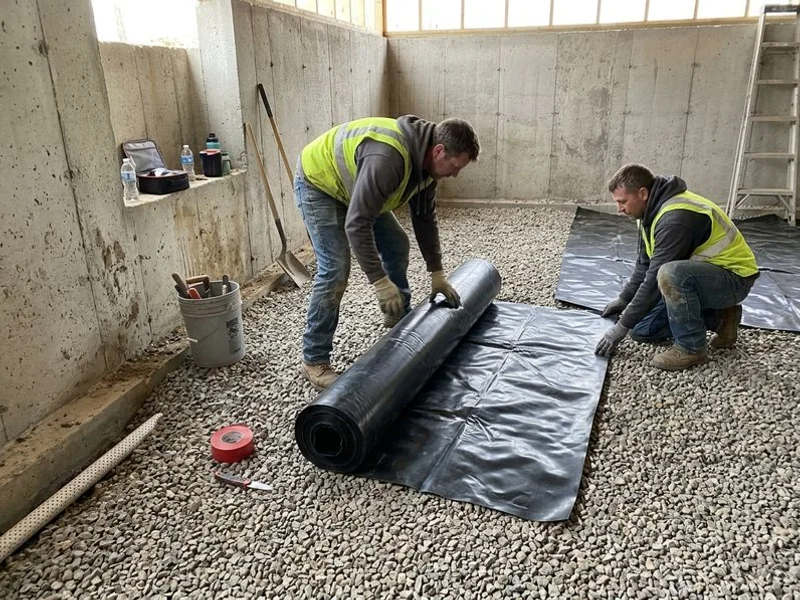
Soil-gas retarder being laid over gravel in a new basement before the slab pour

What's included

  • Sub-slab preparation and sealing
  • Passive radon system installation
  • Post-construction radon testing
  • Passive-to-active fan activation
  • Attic fan mounting, electrical and manometer
  • Builder scheduling around pour dates

For Builders: Getting Passive Systems Right

Wondering what the new rule means for your next pour? Here’s the short version for new construction radon systems.

Iowa HF 2297 made passive radon systems standard in new single-family homes and duplexes as of July 1, 2026. The rule is simple. The details under the slab are where systems work or fail.

According to Iowa HHS, the state code points to the passive methods in Appendix AF of the 2021 International Residential Code. Before the change, 11 jurisdictions already required them, including Polk County and Altoona. Crews in those areas know the routine.

A June 30, 2026 construction law update added one caution. The Iowa Department of Inspections, Appeals, and Licensing (DIAL) issued enforcement guidance on June 25, and the code amendment itself was still being finalized. Check with your local building department before you lock in plans.

ComponentWhat it doesCommon mistake we avoid
Gas-permeable aggregateLets soil gas move freely to the collection pointFines or sand mixed into the gravel layer
Sub-slab T-fitting or perforated loopCollects soil gas under the slabFitting crushed or buried in fines during the pour
Polyethylene soil-gas retarderBlocks gas from rising through the slabUnlapped seams and torn sheeting around plumbing
Sealed penetrations and jointsCloses the easy entry pathsOpen gaps at plumbing stubs and sump basins
Passive vent stackCarries soil gas up and out through the roofPipe routed through unconditioned space or with long horizontal runs
Attic junction boxMakes future fan activation fast and safeNo power left near the pipe in the attic

Radon-resistant guidance from the Connecticut Department of Public Health lists the same basics:

  • At least 4 inches of clean gravel with no fines
  • 6 mil polyethylene sheeting between the gravel and the slab
  • A vent pipe of at least 3-inch PVC running from the sub-slab gravel to the roof
  • Room and a power source in the attic for a future fan

Here’s a pro tip on the sheeting. A Connecticut radon fact sheet from SOS Radon calls for 12-inch overlaps at seams, sealed with tape. That one step fixes the unlapped seams we see most often.

We work with builders across Polk and Dallas counties, from Waukee and Grimes to Ankeny and Altoona. Tell us your pour schedule and we’ll fit the work in around it.

For Homeowners: Should You Activate Your Passive Pipe?

If your home was built with a passive pipe, start with a test. A 48-hour continuous radon monitor test in the lowest lived-in level tells you where you stand.

The EPA recommends fixing a home at 4.0 pCi/L or higher and considering action between 2.0 and 4.0. Here’s how we read the results for a home with a passive pipe:

  • Below 2.0 pCi/L: The passive system may be doing its job. Retest every two years.
  • 2.0 to 3.9 pCi/L: Consider activating, especially if you plan to finish the basement.
  • 4.0 pCi/L and above: Activation is recommended. It’s usually the fastest, simplest fix since the pipe is already there.
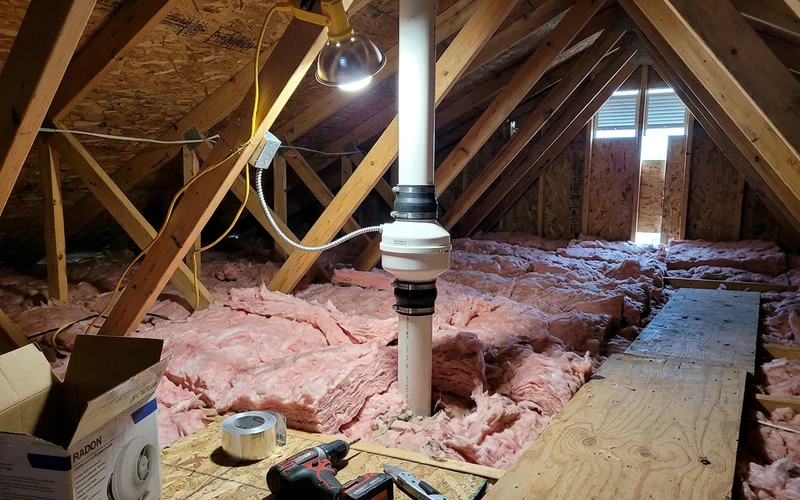
Radon fan installed on a passive pipe in an attic

Many owners in growing suburbs like Waukee, Ankeny and the Easter Lake area assume a new home is radon proof. Testing is how you know. Polk County’s health department reports that more than 70% of Iowa homes test above the EPA action level of 4.0 pCi/L.

Our guide on how often to test for radon covers when to retest after you move in.

Why passive isn’t always enough

A passive stack depends on warm air rising in the pipe. On mild days, or when soil under the slab is tight, that draft is weak. An attic fan creates steady suction no matter the weather.

The gap can be big. One radon industry guide from Erase Radon puts passive systems at a 30% to 50% reduction, compared with 95% or more once a fan is running. If your test lands near or above 4.0, that difference matters.

What Activation Involves

Activation turns a passive pipe into an active soil depressurization system. We:

  1. Confirm the pipe is continuous from the slab to the roof and check for leaks.
  2. Install a radon fan in the attic on the existing pipe.
  3. Connect it to the attic junction box or add a dedicated circuit if one wasn’t left.
  4. Add a U-tube manometer in a visible spot so you can check suction any time.
  5. Run a post-mitigation test after the fan has run at least 24 hours.

Most activations are finished in a short visit. Because the pipe is already in place, a 2026 cost guide from InspectandTest says homes like yours often need only the fan and electrical work, typically $400 to $800.

Fans do wear out. Angi says most last five to 10 years, so jot down the install date and glance at the manometer now and then.

If testing shows a second slab section, like a slab-on-grade addition, needs its own suction point, we’ll explain why and quote it before doing the work.

Builder or Homeowner, Start Here

The EPA and CDC estimate radon causes more than 21,000 lung cancer deaths in the US each year. Whether you’re planning new construction radon systems or living with a passive pipe today, a little action now pays off.

Builders can request a quote with plans and the pour schedule. Homeowners can book a radon test or send us an existing result. If the result is high, see how our residential radon mitigation team handles homes that need more than a single fan. New to radon? Our overview of radon mitigation in Des Moines covers testing, systems and the warranty in one place.
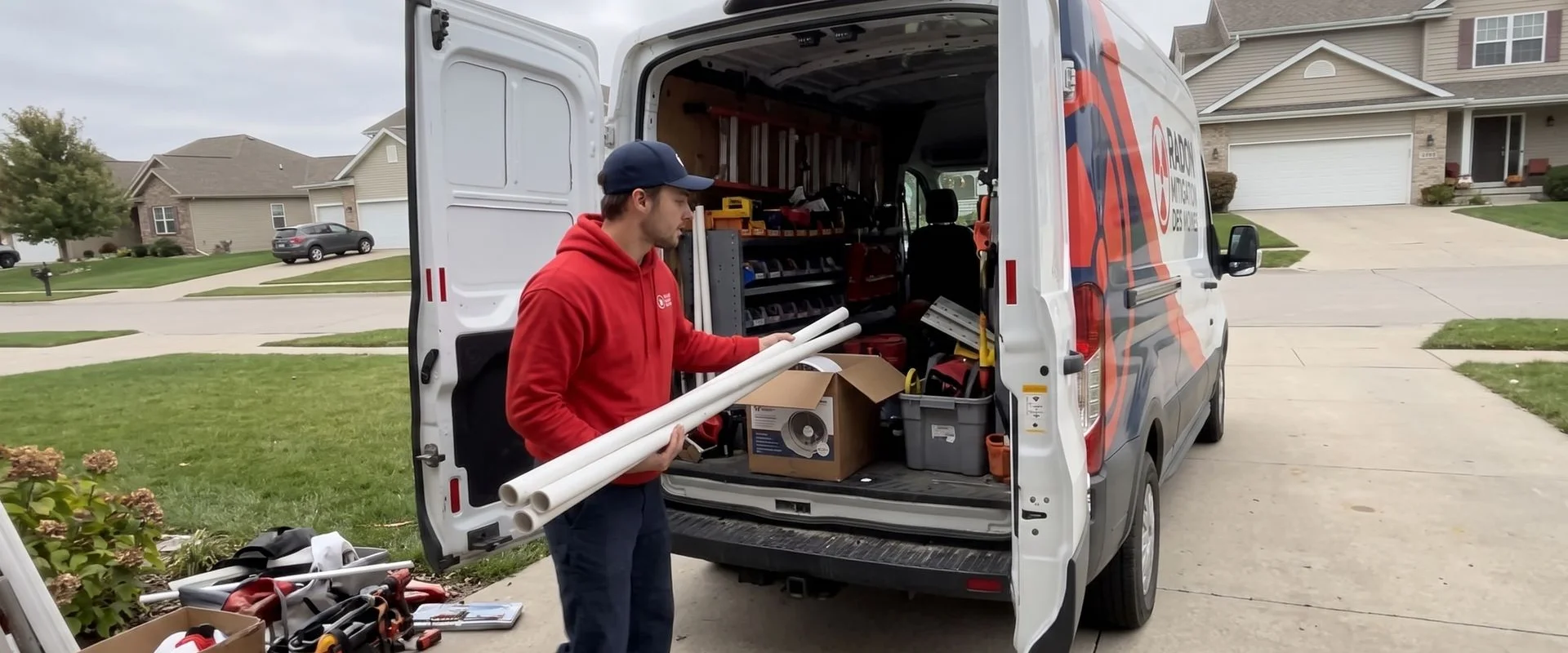
Why homeowners choose us

Why Choose Radon Mitigation Des Moines for New Construction Radon Systems?

Builder-friendly scheduling

We coordinate with your superintendent around excavation, plumbing rough-in and pour dates.

Done right under the slab

Aggregate, retarder seams and penetrations are where passive systems fail. We get those details right.

Fast activations

Most passive-to-active upgrades take one short visit, since the pipe is already in place.

5-year warranty

Passive installs and fan activations are covered by our 5-year warranty on systems and installs.

How it works

How Does New Construction Radon Systems Work?

  1. 01

    Pre-pour prep

    Gas-permeable aggregate, a sub-slab T-fitting and a sealed soil-gas retarder go in before concrete.

  2. 02

    Seal & vent

    Slab penetrations and joints are sealed, and the passive stack runs through conditioned space to the roof.

  3. 03

    Post-construction test

    After move-in, a 48-hour continuous radon monitor test shows whether the passive pipe is enough.

  4. 04

    Activate if needed

    If the level is 4.0 pCi/L or higher, we add an attic fan, junction box and manometer, then retest.

Passive pipe still testing high? We can activate it.

Most passive-to-active activations take one short visit. We retest after the fan runs, and activations are covered by our 5-year warranty.

Our work

Real installs and testing jobs across the Des Moines metro. Click any photo to enlarge.

Client Verification

What Customers Say About Our New Construction Radon Systems

"Our new build in Waukee came with a passive pipe but still tested above 4. They added the attic fan and manometer in one visit and explained the readings."
Chris L. · Waukee
"They showed up the day before our pour, set the stub and retarder, and were gone by lunch. No delays, no callbacks."
Site Superintendent · Ankeny builder
"We assumed our Altoona home was radon proof because of the pipe. The test said otherwise. The fan went in quickly and the retest came back low."
Priya D. · Altoona
Straight Answers

New Construction Radon Systems Questions, Answered

My new home has a passive radon pipe. Is that enough?

Not always. Iowa HF 2297 requires passive systems in new homes, but a passive pipe doesn't guarantee a level below 4.0 pCi/L. Test after move-in. If it's still high, we activate the pipe with an attic fan and manometer.

What does Iowa House File 2297 require?

Starting July 1, 2026, newly built single-family homes and duplexes in Iowa must include a passive radon mitigation system installed during construction.

What is a passive radon system?

It's a sealed vent pipe from a gravel layer under the slab up through the roof. Warm air in the pipe creates a natural draft that pulls some soil gas out. It has no fan until it's activated.

How do you activate a passive system?

We cut in a radon fan on the pipe in the attic, wire it to a dedicated junction box, add a U-tube manometer you can see, and retest after the fan has run at least 24 hours.

When should I test a new home?

Test after you've moved in and the heating or cooling system is running normally. A 48-hour continuous radon monitor test gives a fast answer.

Do builders need to hire a credentialed contractor?

Anyone mitigating radon for pay in Iowa must hold an Iowa HHS credential. Using a credentialed team also helps make sure the system works if the homeowner later activates it.

Can you work around our pour schedule?

Yes. We schedule radon prep between plumbing rough-in and the slab pour, and we can turn around quickly when weather moves your dates.

Is the activation covered by a warranty?

Yes. Fan activations and new installs carry our 5-year warranty on systems and installs.

Still have a question?

Our support line answers 24 hours a day, 7 days a week.

24/7 booking & support

Ready to Book New Construction Radon Systems?

Credentialed new construction radon systems across Des Moines and 25 nearby cities, with a written quote, a post-mitigation test where it applies, and a 5-year warranty on systems and installs.

  • Iowa HHS credentialed
  • 5-year warranty
  • Post-mitigation test