Is your radon system still doing its job? It’s easy to forget about a fan that hums along in the garage or attic.
That’s why radon system maintenance is worth a few minutes of your attention. In Iowa, the stakes are high. The Iowa Department of Health and Human Services says EPA has placed every county in the state in Zone 1, and the average indoor level here is 8.5 pCi/L, compared to 1.3 pCi/L nationwide.
So when a fan stops, you want to know fast.
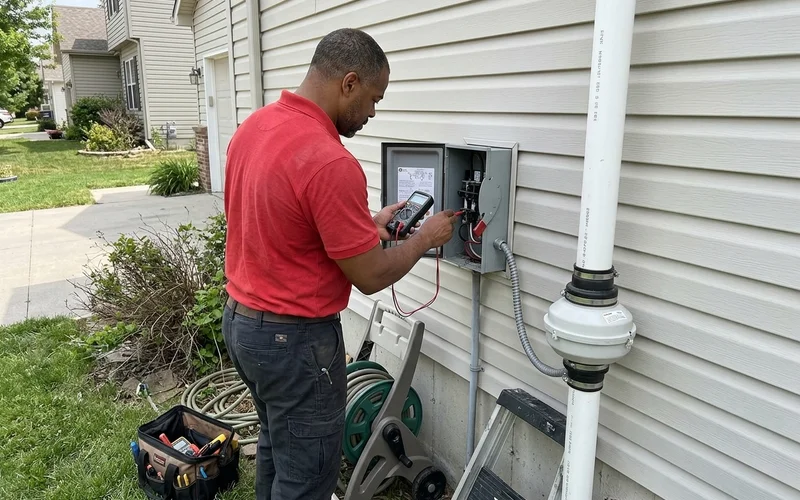
Below is a quick checklist of what we see most often, followed by what we do about each problem. Grab your phone, walk over to your manometer, and let’s go through it together.
Is Your Radon System Working? A Quick Symptoms Checklist
Most radon system problems show up in a few predictable ways. If you notice any of these, call us.
| What you notice | What it usually means | What we do |
|---|---|---|
| Audible fan failure alarm sounding | Fan has stopped or suction dropped | Check power and fan, replace fan if failed |
| Manometer liquid levels are even | No suction in the pipe | Find the cause: power, fan, disconnected or blocked pipe |
| Fan is louder or rattling | Worn bearings or loose mounting | Replace fan, re-mount on isolation couplings |
| Water dripping from the fan | Condensation pooling in the housing | Fix pipe slope or add a condensation bypass |
| Ice at the exhaust in winter | Frozen exhaust restricting airflow | Check pipe size and vent screen, re-route if needed |
| Retest came back high | Leaks, failed seal or undersized design | Inspect, smoke test, re-seal or add suction |
| Sump lid missing or cracked | Soil gas bypassing the system | Install a gasketed airtight lid |
Winter ice deserves a closer look. A 2025 article from fan maker Vilpe explains that freezing usually comes from too much moisture in the system, not a bad motor. The ice can throw the blades off balance and wear out the bearings, so don’t wait for spring to deal with it.
Use our free radon fan operating cost calculator to see what an older, power-hungry fan is costing you each year. One maintenance guide from Erase Radon estimates that a typical system adds roughly $50 to $100 a year to your electric bill.
Radon Fan Replacement
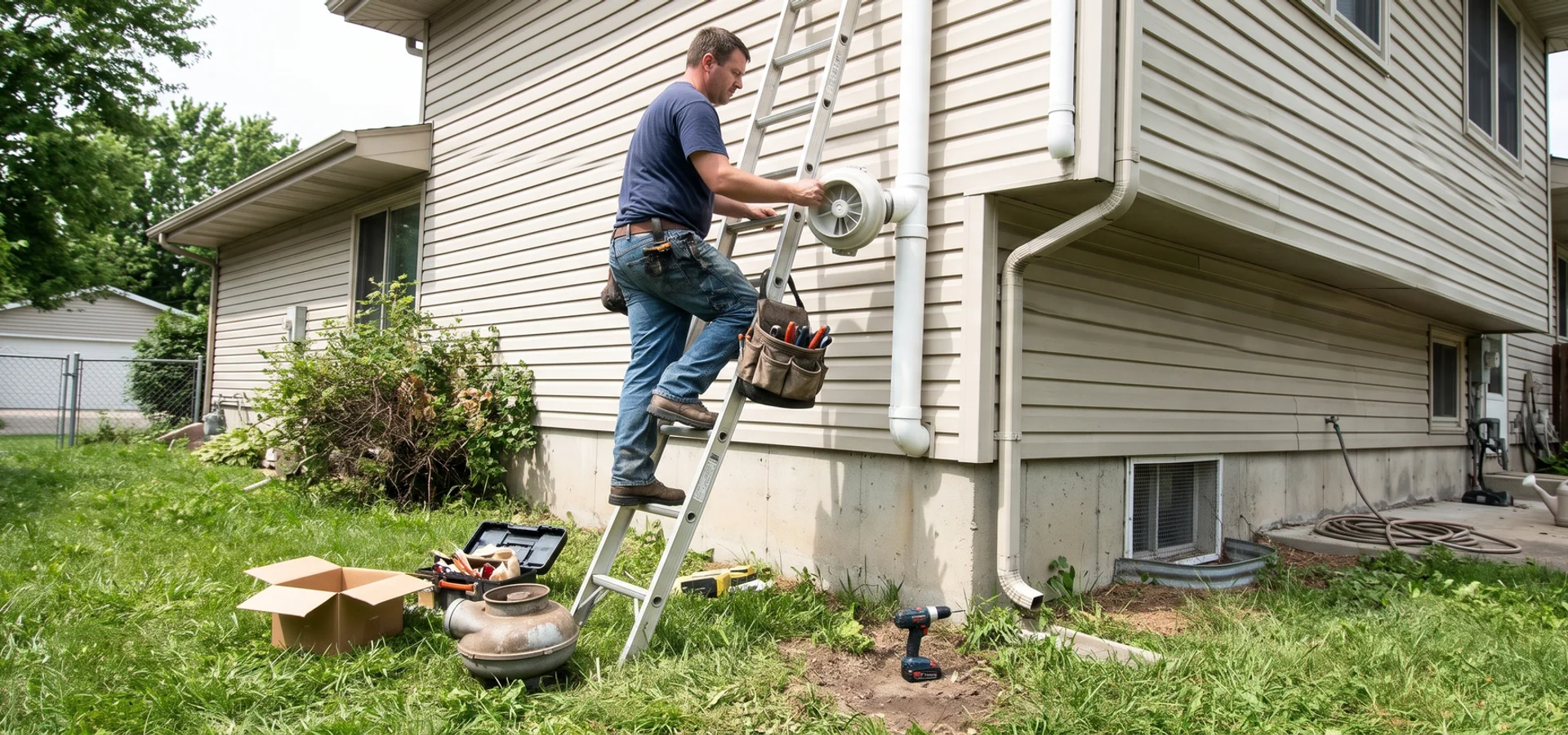
Radon fans run every hour of every day. When one fails, your radon level can climb back to where it started within a day or two.
Most fans carry a five-year manufacturer’s warranty. EPA notes they typically last five years or more before needing repair or replacement, and a quality fan on a well-built system often lasts much longer. If yours is getting up there, a quick check now beats a surprise failure in January.
We carry common replacement fans, so most jobs are done in one visit. Where the original fan was oversized, undersized or noisy, we’ll recommend a better match for your soil and pipe.
Pipes, Couplings and Joints
The rubber couplings that hold a fan in place, often Fernco-style fittings, dry out and crack over years of Iowa heat and cold. A cracked coupling on the pressure side of the fan can leak radon into an attic or garage. We replace couplings and broken pipe, tighten clamps, and confirm every joint with a smoke stick leak test.
Pipe slope matters just as much. Vilpe’s guidance on frozen radon fans points to enough slope for condensation to drain, plus insulation on exposed pipe, as two of the best ways to keep moisture from building up.
Monthly habit worth keeping
Glance at your manometer once a month. It takes five seconds, and an even reading is the earliest warning that something has changed.
Existing System Inspections
Bought a home with a radon system? You inherited someone else’s work. Our inspection covers:
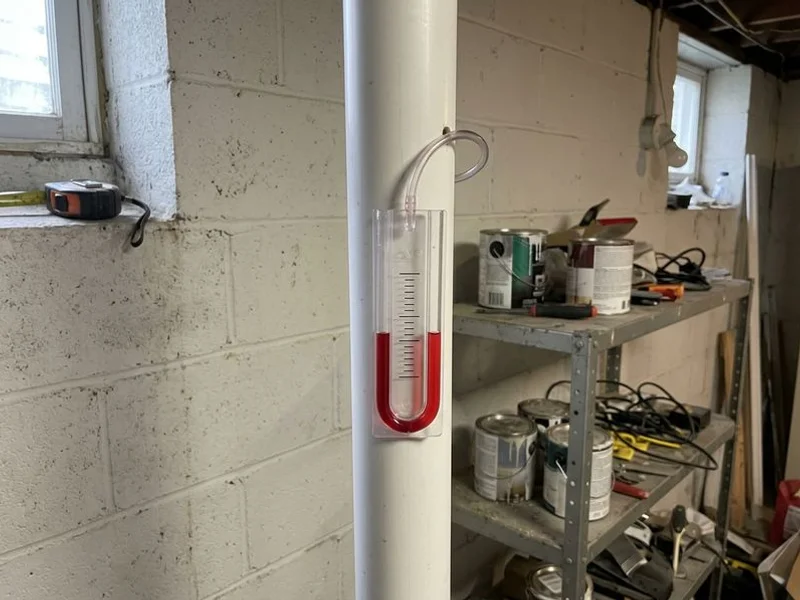
- Fan operation, age and electrical connection
- Manometer reading and whether it’s mounted where you can see it
- Pipe slope, supports, couplings and labeling
- Exhaust location above the roof edge and away from windows and doors
- Sump lid, floor cracks and the floor-wall joint
- A retest recommendation with timing
You’ll get a written summary. If we find a problem, we’ll quote the fix before doing it.
On timing, EPA’s Citizen’s Guide to Radon suggests retesting your home every two years after a system goes in, so you know levels are staying low. Not sure the system is lowering your level at all? Book a radon test along with the inspection.
When Repair Isn’t Enough
Sometimes a system was never designed for the house. A single suction point under a split-level, pipe routed through a cold attic with no slope, or an open crawlspace next to a mitigated basement can all keep levels high.
EPA’s action level is 4 pCi/L, and the agency also suggests considering a fix when results fall between 2 and 4. If your retest still lands above those numbers, our residential radon mitigation team can redesign the system. We’ll explain the options and the trade-offs plainly.
Whether it’s a quick fan swap or a full radon system maintenance tune-up, our Des Moines radon mitigation crews are happy to help. Call (515) 218-7447 any time, or request service online.