
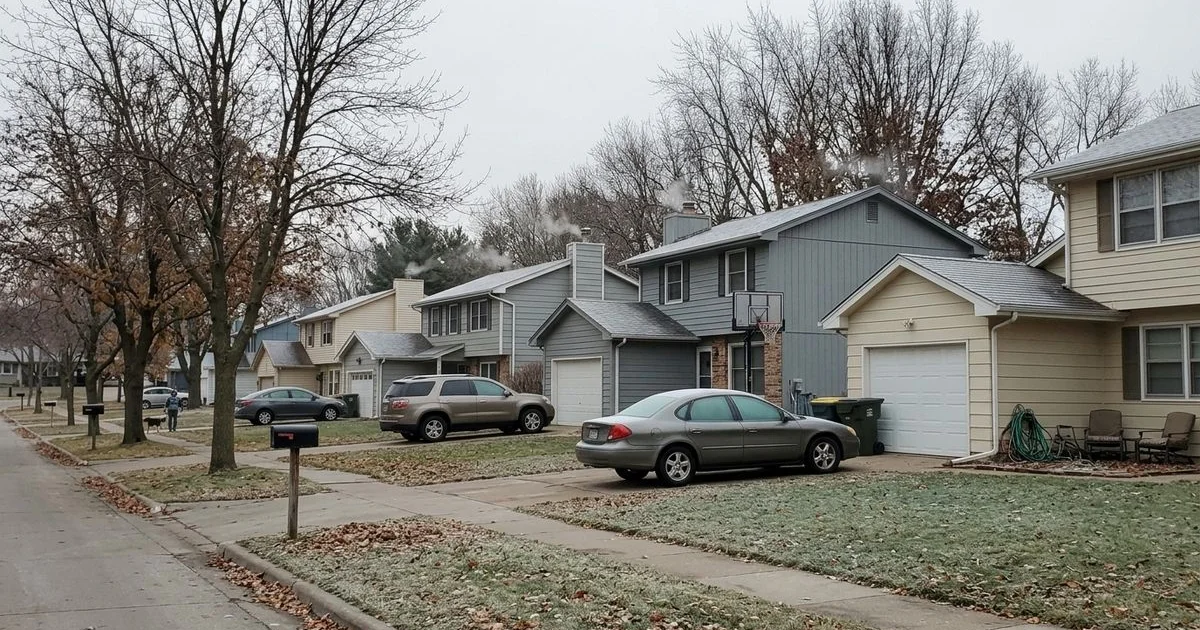
The Short Answer: Iowa Sits on Radon-Rich Ground
Why is radon so high in Iowa? The answer is under your feet. Central Iowa is covered in glacial till, a mix of crushed rock, clay and sand left behind when glaciers pulled back thousands of years ago. That ground contains uranium, which slowly breaks down into radium and then radon gas.
Radon has no color, smell or taste. It moves up through soil and into any building sitting on top of it. Because the glaciers ground that rock so fine, a huge amount of surface area is exposed, and gas keeps escaping from it.
If you’re new to the topic, start with our overview of radon mitigation in Des Moines.
The EPA classifies all 99 Iowa counties as Zone 1, its highest risk category. That’s not true of most states, where only some counties earn Zone 1. Iowa also ranks first in the country for elevated indoor radon, and about 71% of Iowa homes test above the EPA action level of 4.0 picocuries per liter (pCi/L).
Radon levels in Des Moines follow the same pattern. According to 2020 Iowa Department of Health and Human Services figures, the average Iowa home reads about 8.5 pCi/L indoors. The national average is 1.3 pCi/L.
What 4.0 pCi/L means
Picocuries per liter (pCi/L) measures how much radioactive decay is happening in a liter of air. The EPA recommends fixing a home at 4.0 pCi/L or higher. The World Health Organization uses 2.7 pCi/L as its reference level.
The stakes are real. The EPA estimates radon causes about 21,000 lung cancer deaths a year in the U.S., and Iowa lawmakers cite roughly 400 of those deaths in our state alone.
How Radon Gets Into Des Moines Homes
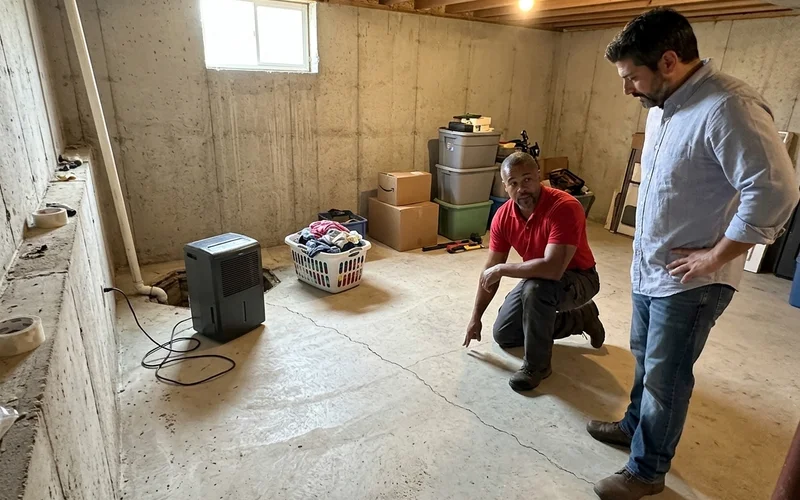
Radon gets in through any opening between the soil and your living space, and it doesn’t need a big one. The most common entry points in Des Moines basements are:
- Cracks in the basement floor and walls
- The joint where the floor slab meets the foundation wall
- Open or loosely covered sump pits tied to drain tile
- Gaps around plumbing, floor drains and utility lines
- Hollow block walls, common in older homes
- Dirt or gravel crawlspaces with no sealed cover
The bigger factor is pressure. A house is usually at slightly lower air pressure than the soil under it, so it pulls soil gas in the way a straw pulls a drink.
That’s why sealing cracks alone rarely solves the problem. You can close every visible gap and the house will still keep pulling from the ground. Fixing it means changing that pressure, which is what an active mitigation system does.
Why Winter Makes It Worse: The Stack Effect
Winter pushes radon levels up because of the stack effect. Des Moines winters are cold, and Weather Spark puts the January average low at 17°F. Snowpack and frozen ground cap the soil around your house, while your furnace heats the air inside.
Warm air rises and leaks out through the attic and upper floors. To replace it, the house pulls air in at the lowest point, and much of that air comes from the soil under the slab.
That’s the stack effect. It’s why winter radon readings in Iowa often run higher than summer readings, and why a test done in July may not show your worst-case level. The frozen ground around the house also leaves the soil under the heated basement as the easiest escape route for radon.
The swing can be dramatic. One radon company, Protect Environmental, reported a single building that read 1.8 to 2.2 pCi/L in summer and 28 to 32 pCi/L in winter. National Radon Action Month falls in January for the same reason.
| Season | What’s happening outside | Effect on indoor radon |
|---|---|---|
| Winter | Frozen, snow-capped soil; furnace running | Strong stack effect pulls soil gas into the basement |
| Spring | Heavy rain saturates soil | Hydrostatic pressure pushes soil gas toward the foundation |
| Summer | Windows open, AC running | Levels often drop, but basements can still read high |
| Fall | Soil drying, heating season starts | Levels start climbing as the stack effect returns |
Spring Rain Adds Pressure
Spring rain adds a second push on top of the stack effect. Des Moines gets about 37 inches of precipitation a year, and NOAA’s 1991 to 2020 normals show May and June each averaging more than 5 inches. Saturated soil around the foundation increases hydrostatic pressure, which pushes soil gas toward the easiest path, usually your basement or crawlspace.
Homes with drain tile and a sump pit can see that gas carried right to an open pit. If your sump pit has a loose or vented lid, spring is when it’s most likely to matter.
Why Your Neighbor’s Result Doesn’t Predict Yours
Your neighbor’s test result tells you very little about your house. It’s common to hear, “The house next door tested fine, so ours is probably fine too.” That’s not a safe assumption. Two houses on the same Des Moines street can test very differently because of:
- Different soil pockets under each lot
- Different foundations, such as a full basement next to a slab-on-grade addition
- Cracks, sump pits and how well each slab was sealed
- How each home is heated, ventilated and lived in
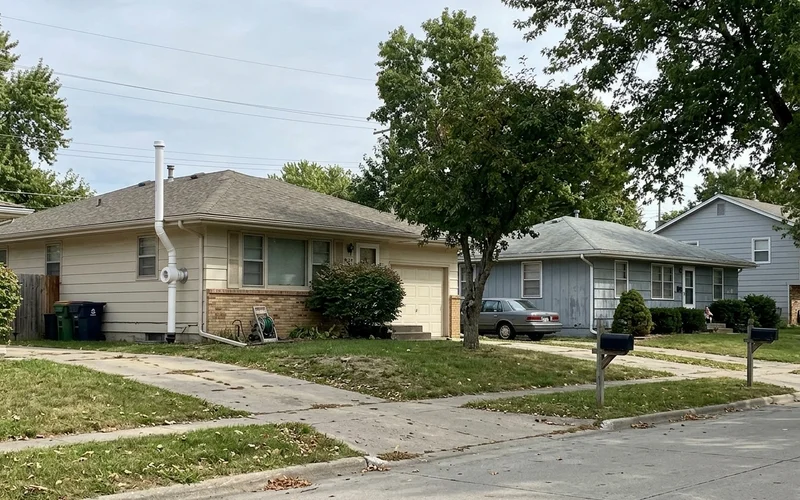
Age doesn’t predict radon either. New homes in Waukee and Ankeny can test high, and so can 1930s Beaverdale Tudors.
New construction is getting a new rule. Gov. Kim Reynolds signed HF 2297 in May 2026, and starting July 1, 2026, it requires passive radon systems in new single-family homes and duplexes. A passive system has no fan and uses no electricity, so it relies on natural air movement.
That helps, but a passive pipe doesn’t guarantee a level below 4.0 pCi/L. Test a new home anyway. State Sen. Scott Webster noted during the debate that a passive system already in place makes it cheaper to convert to an active one later.
What to Do Next
Test your home, because a test is the only way to know your level. A continuous radon monitor test takes 48 hours and gives you hourly readings. Our radon testing service covers homeowners, buyers and sellers across the metro, and business owners with occupied ground-level space can use it too.
Once you have a number, our guide on how often to test for radon explains when to retest.
If your result is 4.0 pCi/L or higher, a radon mitigation system can bring it down. Most Des Moines homes need an active system with a fan that pulls soil gas from under the slab and vents it above the roof. To budget for one, see how much radon mitigation costs in Iowa.
Every system we install is done by Iowa HHS-credentialed technicians, verified with a post-mitigation test and covered by a 5-year warranty. You can confirm any installer’s credential on the Iowa HHS list of credentialed radon mitigation specialists. Ready to find out where your building stands? Schedule a radon test with our team today.